
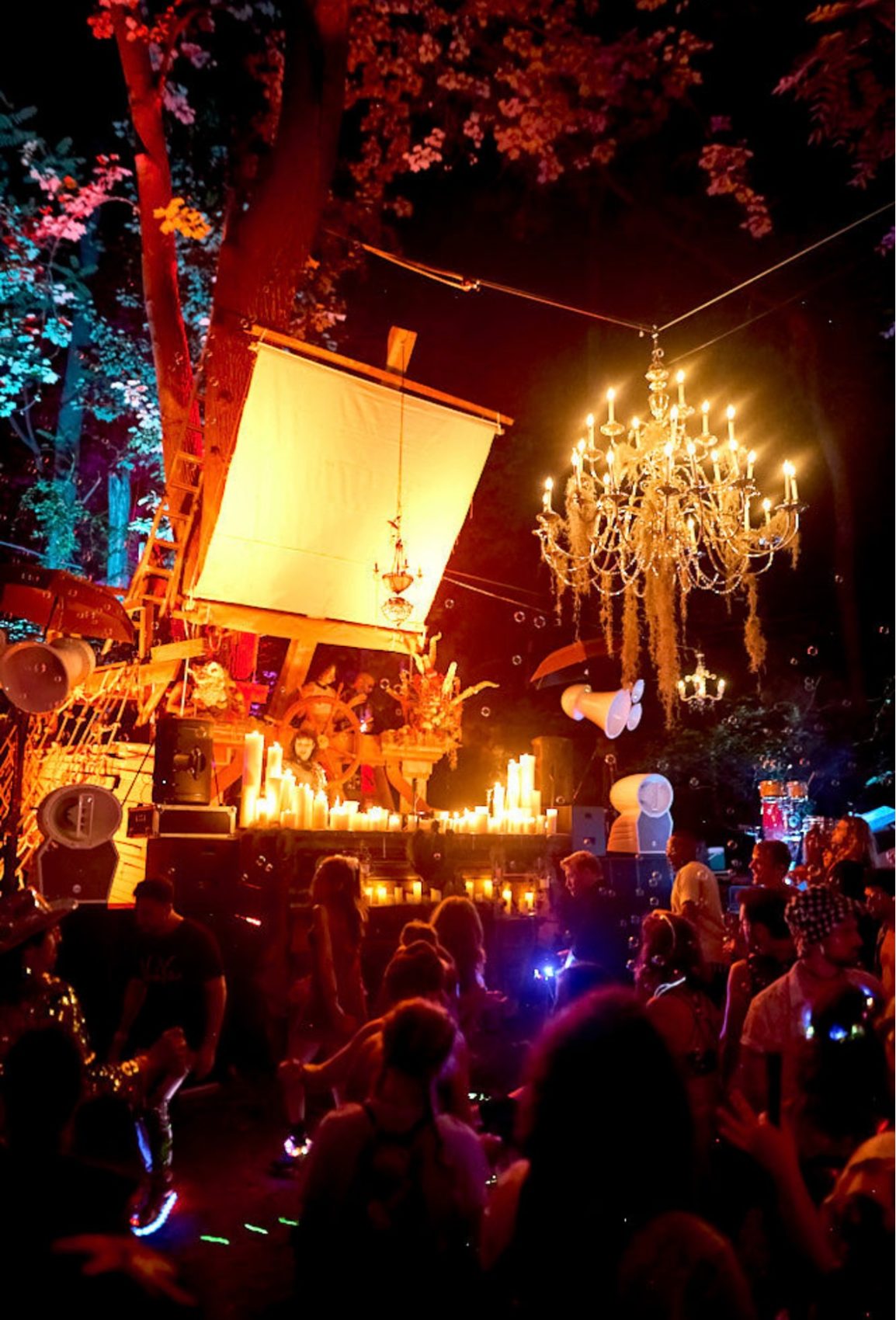
Sound is the oldest medicine we have.
Every culture found a drum, a bell, a bowl or a chant and noticed what it did to people. Modern acoustics finally explains the mechanism.
Why it’s called Therapy
Four things sound does to a body.
Touch, not hearing
Below about 120 Hz, sound is registered by mechanoreceptors in skin, chest and joints as much as by the ear — it becomes physical pressure. Vibroacoustic therapy has used this exact band for decades to ease pain and muscle tension. It’s also why a properly built sub feels like being wrapped rather than punched.
Bodies find the beat
Heart rate, breathing and brain rhythms drift into step with a steady external pulse. It’s the reason a slow tempo can settle a whole room and a rising one can lift it — and the reason a crowd on a well-tuned system moves through a real emotional arc together instead of just standing near each other.
The body’s brake pedal
Low resonant tones, humming and chanting all stimulate the vagus nerve, which measurably slows heart rate and lowers stress response. Sound baths and gong ceremonies aren’t decorative — they’re doing something specific to your nervous system, and a high-fidelity system does it far more completely.
Why bad sound hurts
Clipped highs and smeared mids force your brain to work to separate what it’s hearing — measurable listening effort, which reads as stress and fatigue. Remove the distortion and you can run a system beautifully loud without any of the cost. Clean is the therapy. Loud is just the volume knob.
Plain-language summaries of established acoustics and music-therapy research. We’re engineers, not clinicians — no medical claims, and we’ll gladly share sources.
The Feeling
Anyone can make it louder. Almost no one can make it feel like this.
Anyone can rent a PA that gets loud. What we are after is a system that stays beautiful at every volume, all night. Here are the four pillars we build for and stand on:
Buttery
Buttery and creamy is the goal, and it is what Chris tunes for. Nothing spiky, nothing harsh, at any volume you ask for.
Whisper-clear
A dancefloor loud enough to lose yourself on and quiet enough to whisper across. Guests can stay in conversation.
Bodily
Low frequencies are felt in the body, not only heard. It is the part of a system people remember.
Tireless
Void cabinets carry far more power than a job ever asks of them, so the system runs well inside its limits all night.
Where it matters most
Sound baths, ceremony, yoga and movement.
Low frequencies are felt in the body, not only heard, and a clean system can carry them without harshness. Therapy Sound brings the rig, and its owners, to sound baths and ceremony, yoga and movement, and any gathering built around how sound feels.
- Sound baths & ceremony
- Yoga & movement
“At the core of my work is a simple yet profound philosophy: to spread love through the power of sound.”
— Chris Calihan
Keep going
Tell us what you want it to feel like.
Tell us the space, headcount, hours and anything unusual, and one of us writes back with a spec and a price. Chris and Lindsay personally read everything that comes in.
Or email ccalihan@therapysoundny.com, or call or text 631-252-4860.